




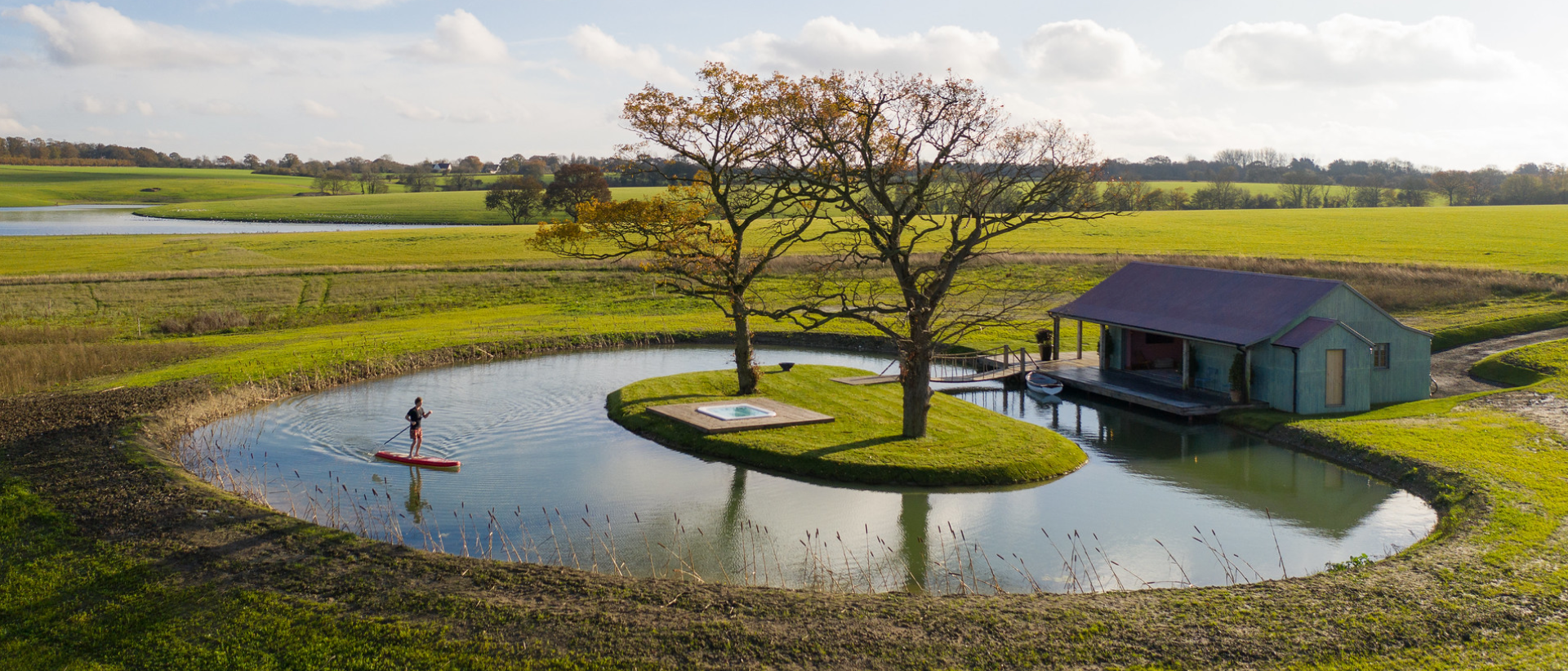
- New website, guest portal and iOS and Android apps
- Custom booking engine and CRM
- Ecommerce, Stripe payments and HubSpot integration
- Digital keys and self-service guest tools
- Back-office and staff management platform
- Azure Cloud, React, TypeScript and React Native


Overview
Wilderness Reserve is a luxury hospitality business offering restored cottages, country houses and mansions across a 5,000-acre estate in Suffolk. Alongside accommodation, it provides food and drink, spa treatments, outdoor activities, weddings and large events. Delivering a stay involves far more than reserving a property.
The digital setup did not reflect that wider operation. The website and the tools used by staff had developed separately, leaving bookings, guest requests, activities and event planning spread across different places. Guests relied on reception to arrange much of their stay. Staff who spent their days moving around the estate depended on systems designed to be used from a desk.
UIC was initially appointed to redesign the website and create an accompanying app. Within six months, the brief had grown into a full digital transformation. The work would still deliver those guest-facing products, but it would also replace the systems and processes they depended on.
The resulting platform included a custom booking engine, CRM, ecommerce, a guest portal, mobile apps, staff management tools and a credit facility. It launched in 2021, following a programme of around 18 months.
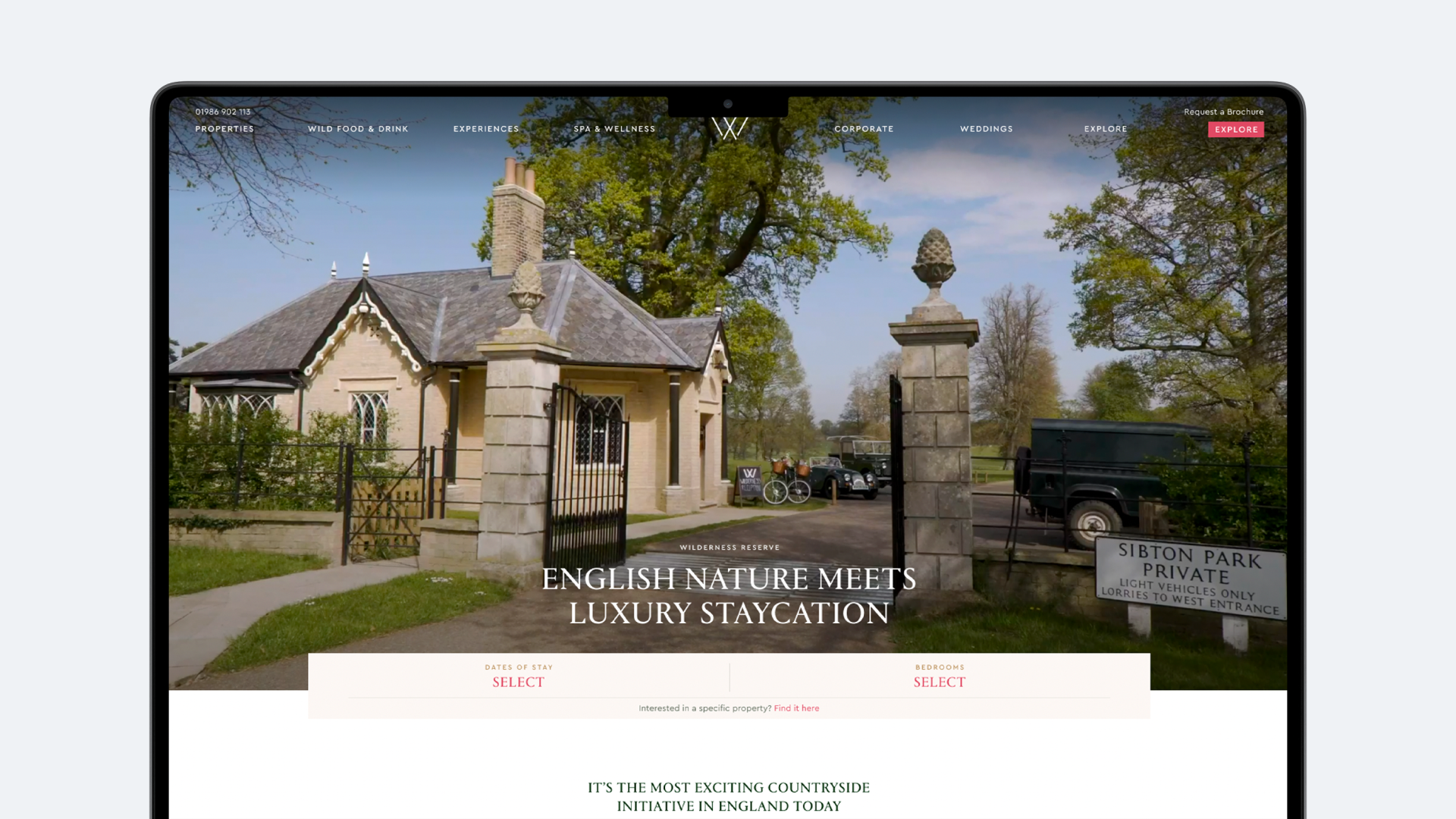
Understanding the operation
The project began with a one-month discovery, much of it carried out on the estate rather than in meeting rooms. UIC made several site visits and spoke to staff across hosting, activity coordination, spa treatments, sales and administration. The team toured the properties and followed how people and information moved across a large site with inconsistent Wi-Fi coverage.
It was eye-opening to see how the operation was run; booked stays lived on a whiteboard with meals and activities managed through shared Outlook calendars. Guest requests and the planning for weddings and other large events sat in Word documents. Several hours a week were lost performing repetitive administrative tasks.
There was no single view of a guest, a booking or everything attached to a stay. A request taken by one team could affect property availability, catering, payments, staffing and the guest’s itinerary, but those dependencies had to be coordinated manually. Guests had to call or visit reception to order food, arrange a treatment or book an activity.
UIC mapped those journeys from the first enquiry through to arrival and the stay itself. The output was a two-year roadmap covering the customer experience and the operational technology needed to support it. That work changed the scale of the brief: improving the website alone would not address the way the service was run.
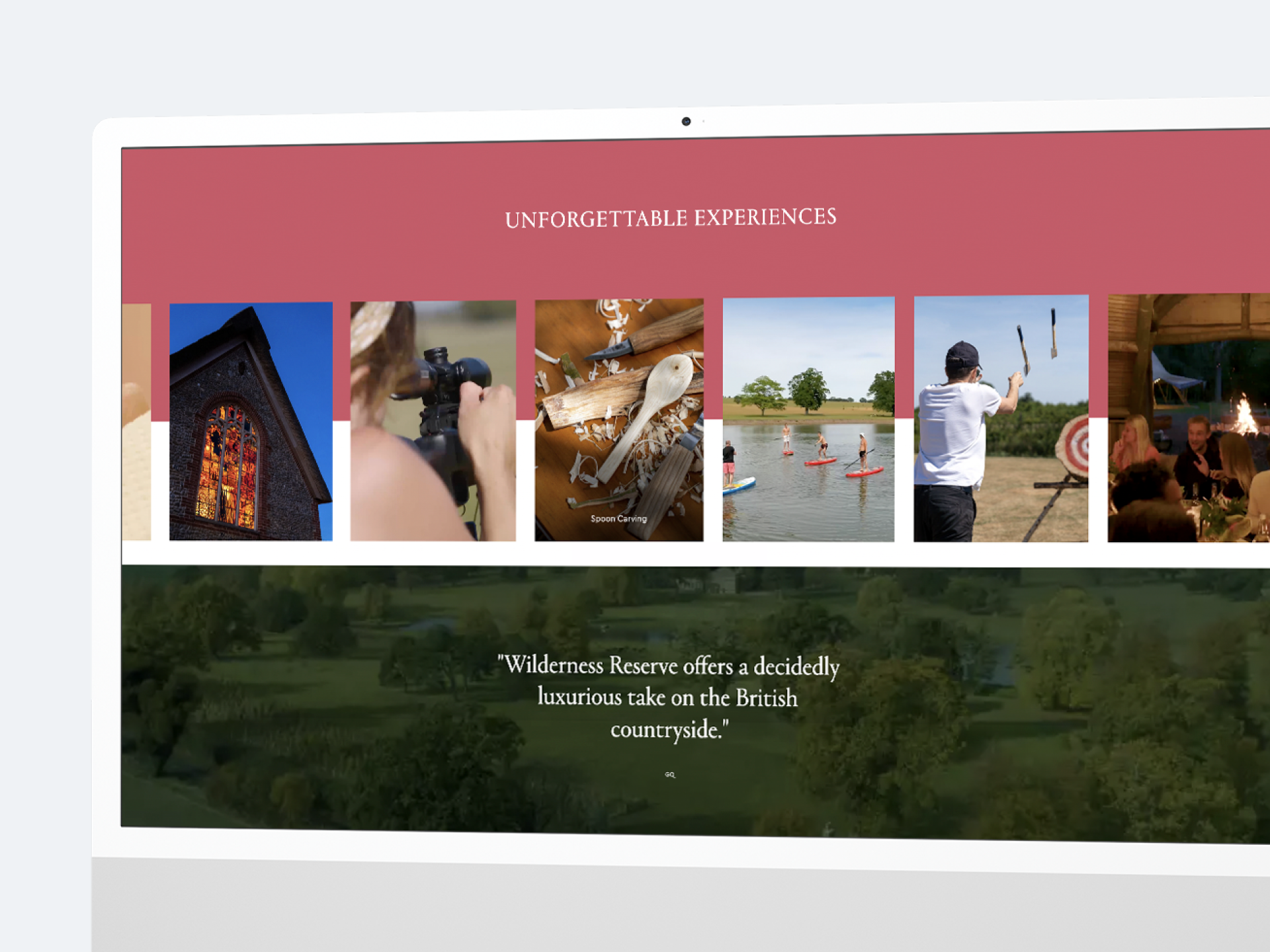
From two products to an entire platform
The website, app and back office could not be treated as separate builds. The website needed live property information and prices. The app needed access to guest bookings, activities and digital keys. Staff needed every request and transaction to feed into the same operational record.
UIC therefore treated the work as a single programme. The public website introduced the estate and its properties. The booking engine managed availability and pricing. The CRM held guest and enquiry information. The guest portal and apps supported everything around a stay. The back-office tools gave staff control over the services presented through each channel.
At its largest, the UIC team numbered around ten people across UX, visual design, product and project management, backend and frontend engineering, mobile development and QA. Product decisions were made with the people responsible for operating the service. Every fortnight, UIC presented the work in progress at Wilderness Reserve, covering current UX and visual design as well as the features coming next.
The fortnightly reviews continued throughout development. They allowed a decision in one part of the platform to be checked against the rest of the operation before it was built. Staff could see how a new guest journey would affect their own work, and the delivery team could resolve those dependencies as part of the product rather than after launch.
Designing the whole stay
Wilderness Reserve already had an established brand, developed with its branding agency and expressed through brochures, signage and other physical details across the estate. UIC translated that work into a digital design system spanning the marketing website, booking journeys, guest products and operational interfaces.
The design needed to do two different jobs. It had to communicate the character of the properties without getting in the way of choosing and booking one. Once a booking had been made, it had to become a practical tool that guests could use quickly throughout their stay.
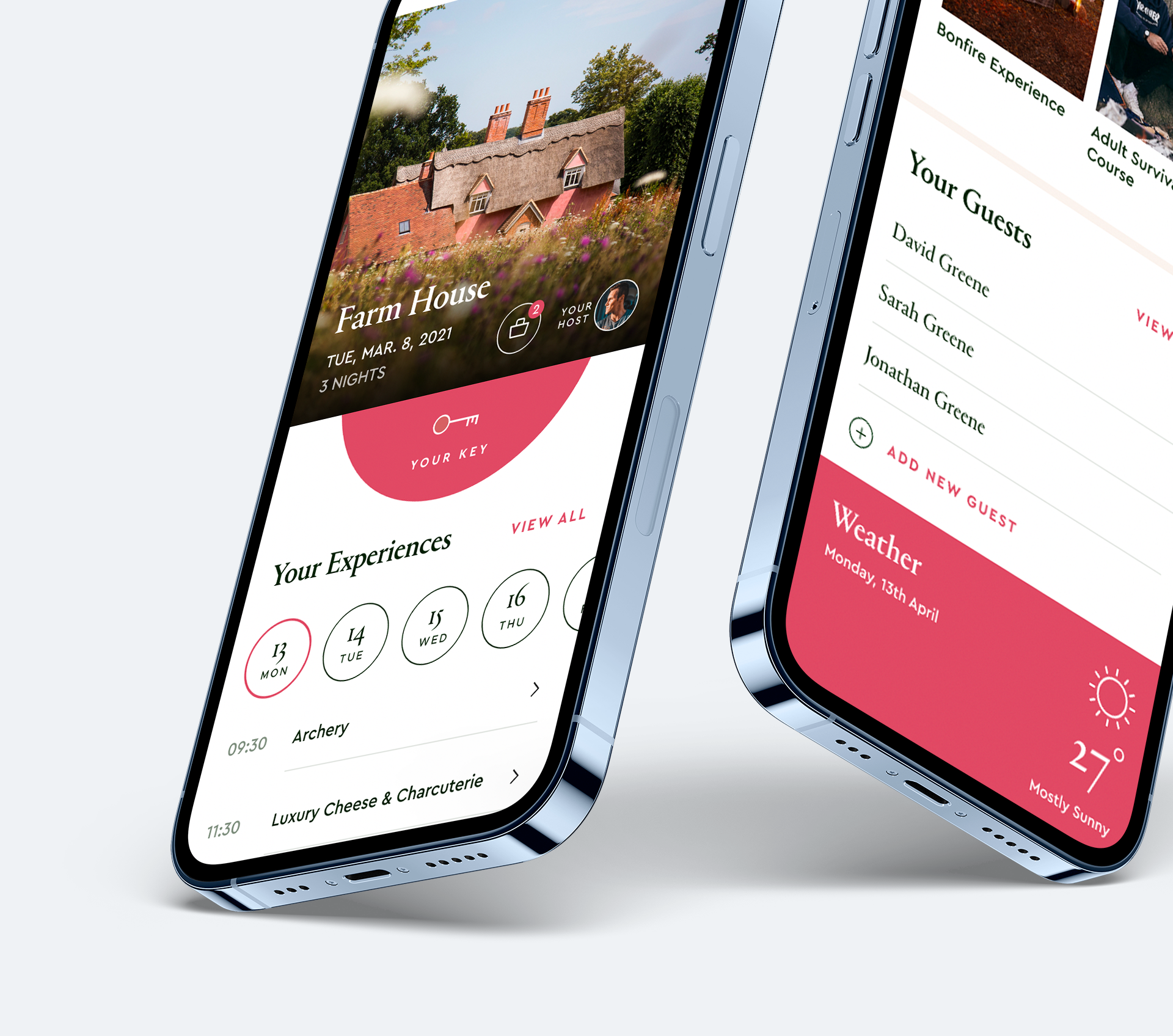
Guests could book and pay for a property online, then bring the rest of their party into the booking. Food, drinks, spa treatments and activities could be planned and purchased through the guest products. Administrative tasks, including the disclaimer forms required for activities such as axe throwing, could also be completed without going through reception.
The iOS and Android apps carried the same information into the stay. Guests could manage bookings and purchases from their phone, while digital keys gave them access to their property without collecting or returning a physical key.
End-to-end testing ran alongside design and development. Staff and a group of guests tested complete journeys rather than isolated screens, from finding an available property and paying for it through to booking an activity and managing the stay. Feedback went back into the fortnightly design and development cycle.
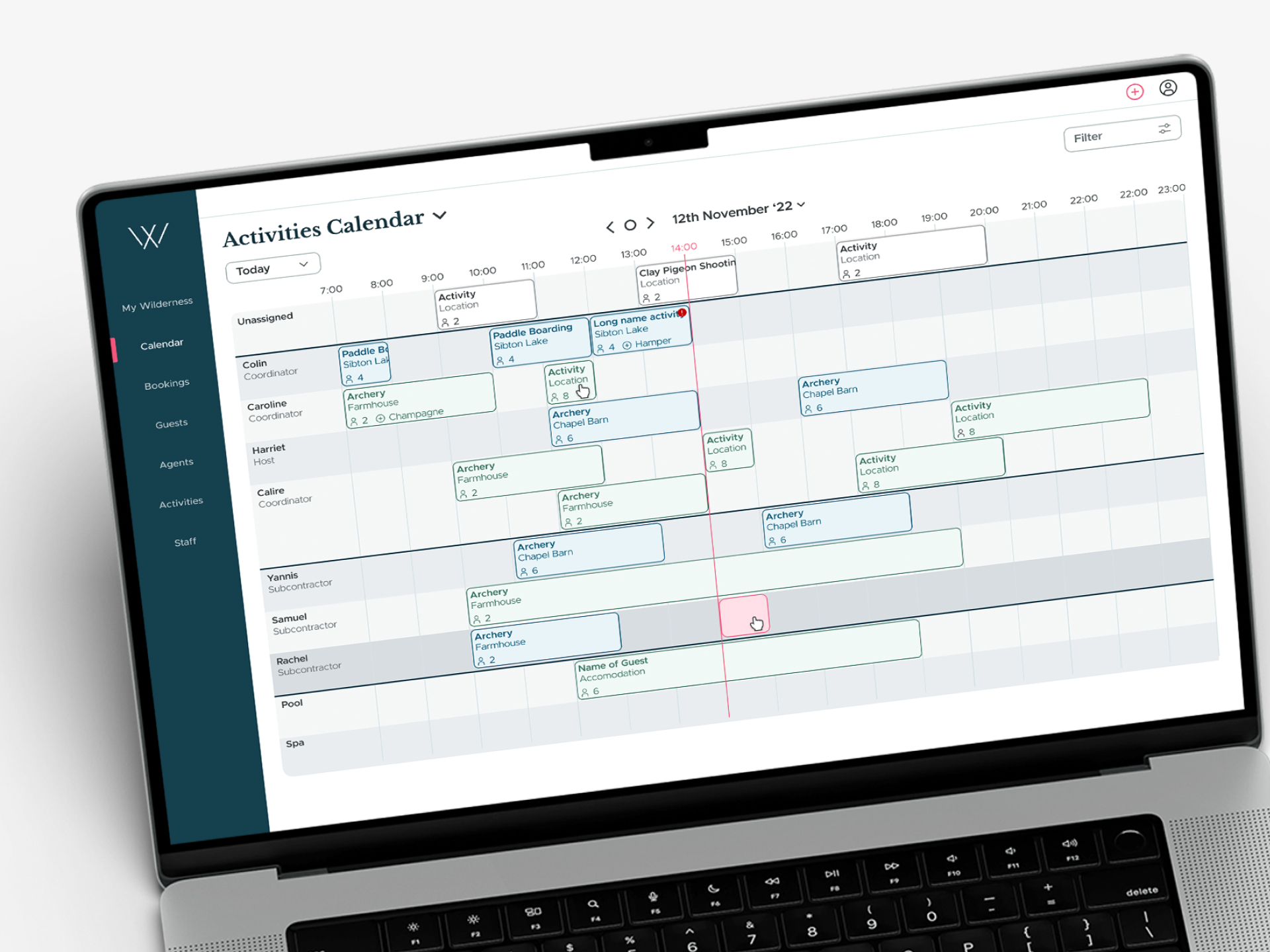
A back office built for the estate
The back-office platform was the operational centre of the new service. It brought together property availability, bookings, guest information, activities, payments and staff requirements, replacing the need to reconcile them across separate tools.
An interactive availability calendar allowed staff to create and manage bookings that arrived online, by phone, by email or through WhatsApp. Property prices could be varied and published through the booking engine, so changes made by the team controlled what guests saw on the website.
Activities worked in the same way. Staff could configure prices, purchases available during an activity and the people needed to run it. Those settings determined what a guest could book and gave the operational team the information required to deliver it.
The CRM was built specifically for Wilderness Reserve and worked with the custom booking engine rather than sitting alongside it as a separate record. Stripe handled ecommerce payments, while the credit facility supported the more involved financial administration associated with bookings and large events. HubSpot connected guest marketing and enquiry nurturing to the wider platform.
Every back-office interface was designed for mobile as well as desktop. Hosts and activity teams could access the information they needed while working across the estate, keeping the system useful at the point where the service was being delivered.
The technology behind it
UIC built the platform from the ground up, without carrying the previous systems into the new architecture. The aim was to give Wilderness Reserve a common technical foundation that could support new properties, services and customer journeys as the business changed.
The backend ran on Azure Cloud. Azure AD provided authentication and authorisation, Azure Functions ran background tasks, and an automatically scaling Azure web service hosted the backend application. Azure Kubernetes Service supported the CMS used by the guest-facing website, with redundancy and scaling designed into the infrastructure.
The website, guest portal and back-office application were developed in React and TypeScript. The iOS and Android apps used React Native, allowing code to be shared across the guest-facing products while retaining native mobile behaviour. GraphQL APIs connected each interface to the backend.
This gave the different products one source for availability, pricing, bookings, guest information and activities. A change made by staff could flow through to the relevant guest experience without being entered again in another system.
What changed
The launch changed what guests and staff could do for themselves. Guests could manage the practical parts of a stay from the same digital experience used to make the booking. Staff could work with live operational information from wherever they were on the estate.
It also gave Wilderness Reserve a platform that was not tied to the size of the business at launch. The reserve had around 20 properties when the project began and has since grown to 26. Properties, prices, activities and staffing requirements can be added and managed within the same system as the business changes.
The relationship continued beyond Wilderness Reserve. UIC was subsequently appointed to create a website, membership application platform and self-service app for Pavilion, a private members’ club under the same ownership.

